
How Technology Improves Student Learning and Sends More Kids to Graduate School
The modernteaching landscape has been changing in recent years, as Becoming a Better EFL Teacher has made note of on several occasions. Technology is often playing a bigger role in these shifts than many are willing to acknowledge, which is the focus of today's post. Writer Sophia Foster of online learning resource http://www.mastersdegreeonline.org discusses the pros and cons of technology-assisted learning, and makes some predictions about the future.
Since the Internet was first introduced to the public less than 20 years
ago and online access has increased worldwide, the use of technology in
American classrooms has evolved from an occasional tool into a daily routine.
While some educators remain speculative about the rising number of schools that
incorporate smartphones and tablet devices into their curricula, the majority
of teachers and administrators have noted the numerous benefits of fostering an
appreciation for technology among today's young people.
From chalkboards and No. 2 pencils to overhead projectors and slide rules,
classrooms have historically embraced new learning implements on a widespread
level. This has certainly proven true in the last two decades, as computer labs
(typically one or two per school) have been replaced by laptop computers and/or
tablet devices for each student. In 2010,
this movement
was further bolstered by the National Education Technology Plan (NETP), created
by the U.S. Department of Education's Office of Educational Technology and
spearheaded by President Obama. The plan falls in line with the president's
goal of graduating 60 percent of American college students by 2020. "Education
is vital to America's individual and collective economic growth and prosperity,
and is necessary for our democracy to work," Education Secretary Arne Duncan
wrote.
"Almost all education has a political motive: it aims at strengthening some group, national or religious or even social, in the competition with other groups. It is this motive, in the main, which determines the subjects taught, the knowledge offered and the knowledge withheld, and also decides what mental habits the pupils are expected to acquire. Hardly anything is done to foster the inward growth of mind and spirit; in fact, those who have had the most education are very often atrophied in their mental and spiritual life."
in a letter to Congress. "To achieve this aggressive goal, we need to
leverage the innovation and ingenuity this nation is known for to create
programs and projects that every school can implement to succeed."
The plan includes several new projects aimed at producing public school
students with a knack for technology. One is Community Everywhere, a
forum-based site that allows visitors to post questions and concerns, and then
engage in discussion with other members of their community. Another, Learning
Registry, allows administrators of sites for federal agencies (including NASA
and the Smithsonian Institute) and NGOs to "tag" content so that it may be
located by common search engines. In addition, the plan also supports
independently funded projects, such as an "achievement badge" system inspired
by contemporary video games sponsored by the MacArthur Foundation and Mozilla
Foundation.

Nationwide, public and private schools have adopted the ideas put forth by the
NETP. A recent article by NPR contributor Sam Evans-Brown
http://www.esl.eu/eu/ href="http://www.npr.org/blogs/alltechconsidered/2012/10/03/162148883/some-schools-actually-want-students-to-play-with-their-smartphones-in-class" target="_blank"> profiled
Oyster River Middle School in Durham, N.H., where
teachers permit students to bring their handheld smart-devices to class. But
rather than using them to play games or post on Facebook, the tablets and
phones function as daily planners and reference materials. To mitigate concerns
among low-income families, the school also keeps a stock of spare iPads for
students who cannot afford their own. The San Francisco Chronicle
reported a similar program at another school, Cathedral High School in
Indianapolis, which is supplemented
by the "iSquad", a team of tech-savvy faculty members
committed to training the entire staff on how to use iPad tablets effectively
by 2016. And FastCompany recently noted that schools
across the country are implementing "vo-tech" STEM
(Science, Technology, Engineering, and Mathematics) programs aimed at creating
interest in these highly relevant subjects among students at low-income schools
- many with the help of prominent technology firms like IBM.
In addition to classrooms, household Internet activity has also risen in recent
years. According
to figures
compiled by the Economics & Statistics Association, 68
percent of American households use broadband Internet service (which enables
use of handheld devices), up four percentage points from the previous year;
household computer ownership has also risen 15 percentage points in less than a
decade. Another growing trend is ownership of phones capable of accessing the
Internet. A report titled "Mobile Technology & Academics," authored by two
Boston College researchers, noted that since 2008, the number of students with
smartphones has risen from 20 percent to more than 65 percent.
Still, the "smart-classroom" movement has its opponents. A recent article by State
Impact NPR found that a significant contingent of
teachers view
technology as merely one of many possible educational tools, none of
which will replace the intrinsic value of a committed educator or classroom
leader. Budgetary constraints are another concern. Cuts in state funding have
led several schools to drop arts classes, physical education, after-school
activities and other vital programs - and now many are expected to afford
state-of-the-art-technology. Patty McNerney, technology director for an Ohio
district, told The Dayton Daily that most of her
school's tech financing comes from private
donations, grant monies and Title I funds. And Matt Burns of TechCrunch
noted earlier this year that tablet devices in classrooms are likely to hinder
the learning process for public school students, not effectively aid it as some
have claimed. "Learning is still prevalent in schools, but the storage of facts
and thoughts is not," he noted. "Digital textbooks will only further this
problem.
"You will not reap the fruit of individuality in your children if you clone their education. Marilyn Howshall"
Just click on a word to get its definition."
However, as an article in The Telegraph noted two years ago, the
use of technology
has the capability of altering the human learning process - and
for many, this transformation has already taken place. Several educational
experts argue that constant use of the Internet - which requires a constant
stream of different reading materials, as opposed to a singular item like a
book or magazine - has effectively altered the way we read information and
mentally process it. This "associative" thinking brought on by web usage has
replaced the more linear thinking in the minds of many adults and children,
leaving them unable to read, write or generally concentrate on a specific task
for a prolonged period of time. So, while individuals have become more
tech-savvy and Internet-friendly, most learners are simply incapable of
learning the old-fashioned way. "'It seems pretty clear that, for good or ill,
the younger generation is being [remolded] by the web," social psychologist Dr.

Aleks Krotoski told The Telegraph. To that effect, educational
institutions that incorporate technology in the classroom are keeping with the
times.
Audrey Watters of The Digital Shift writes that today, the vast majority
of schools have found ways to use technological implements - though
some have
been more successful than others. She notes that many
schools rely on outdated hardware, and simply do not supply enough
devices/computers for students; according to NCES statistics from 2008, the
ratio of children to Internet-equipped computers was 3:1 nationwide. She also
urges schools to address logistical concerns, such as a large number of
electronic devices simultaneously using one network, before heavily investing
in technology and software.
Just as computers, smart-phones and tablets have transformed the classroom
dynamic in the previous decade, the increased use of Internet for educational
purposes stands to grow exponentially in the coming years. During this crucial
trial period, teachers must find ways to incorporate web-based learning into
their curricula - whether they approve of the current trend or not.

Oxford/Tumblr
If you're new here, you may want to subscribe to my RSS feed. Thanks for visiting!
By coincidence, the Oxford Dictionaries blog just added a post about Tumblr English. It’s useful if you’ve just gotten started and feel confused by the jargon. I take issue with one premise of the post:
Before you start your own blog, review some important features you need to know
I believe that most people learn how to use tech tools better when they just start using them. If you read everything you need to know about it first, it a) won’t make sense, because it’s virtually context free, and b) may intimidate you into never trying it. I started Tumblr without knowing most of these words, and so can you.
Having said that it's worth considering it withESL teaching in the front. In case you really sift through it and keep this on your mind I think it will make a difference on the long term.

However, you’ll have more fun if you learn the jargon–even if you don’t use most of it yourself–eventually.
If you’ve started to use Tumblr but don’t feel comfortable yet, check out the post! And yes, the Oxford University Press is on Tumblr.

Possibly Related Posts:
Many thanks for staying with me through this article. I hope you did not care devoting your precious time on it. When you really liked it there are more about ESL as well as other topics on here. Don't forget to have a look when you see fit and when you have any opinion on this comment under.
Advertising: The unreal reality
Mary Jane, a twenty-year-old woman, was waiting in line for about 20 minutes. She, like
 other people, was in a fast food restaurant which had just released a new hamburger. On a display screen, this ¨dish¨ looked really scrumptious and she started to drool. After being there for almost an eternity and feeling that her stomach was about to explode, she got at the cashier and asked for the meal she had been waiting for. To her disappointment, she just got a mere piece of what she had seen on the display.
This is a good example of how deceitful advertising can be. How many times have we
 been deceived by this kind of lie? Well, it is well-known that companies distort the reality in order to sell their products, but how long is it going to last? Is there a boundary? Unfortunately, the answer is uncertain. While some researchers say, ¨people will still consume products since they have a need for them, ¨ there is another group of people that claims that we have the power to decide and select. We, as costumers, can manage to control this entire situation. We are entitled to accept or refuse what is offered and sold to us.
It’s really a pity when kids cry when their superheroes or their beautiful and graceful dollies
 are not the ones they saw advertised on TV. But not only kids are victims, adults also are affected by this situation. For example, it is funny to see when men and women buy these fat reduction creams thinking that they are going to get in shape by rubbing this ¨magic substance¨ onto their bodies. You’ll probably think that I am mocking at them. But it is not what it seems because I have also experienced these events during my life.
It seems that everybody has been persuaded to buy something and ended up with the
 other side of the coin. We know that everybody has necessities for food, entertainment, and clothing. It is in these situations that companies play with these necessities with only one purpose: to increase their sales. Our mission, from my humble opinion, should be to state who is the one in control: companies or us. It’s just a matter of taking the plunge and beginning to ask for what is offered should be same to what is sold. So, from now on, think twice before running to a store or a restaurant to get what you just saw on a billboard or TV. You‘ll probably be part of the statistics of people tricked by publicity.
Vocabulary
Scrumptious (adj): An informal way to say delicious. EX.
"All men by nature desire to know."
This hamburger is really scrumptious.
Drool (v): To produce saliva in excess. EX. The dog was drooling because it was hungry.
Deceitful (adj): Dishonest. EX. Tabloids just publish deceitful news.
Distort (adj): To change something so that it is not clear or true. EX. companies distort the reality in order to sell their products

Boundary (n): A real or imaginary line that shows a limit. EX. Countries are separated by boundaries.
Be entitled to (exp): To have the right to do something. EX. With all his experience, only he was entitled to give an opinion about the situation.
Rub (v): To spread a liquid or cream over a surface by pressing pressing the substance firmly.

Have you ever been deceived by advertising? What happened? What did you do?
Send us your comments, opinions and any kind of feedback to goesling.wordpress@gmail.com. You can either write us an email or send us a voice message.

SUPERLATIVES
Superlatives are commonly used in advertising.

Ex: We have the BEST burger.
Our car is the FASTEST.
FORMATION OF SUPERLATIVE ADJECTIVES
Words with one syllable : add –est
Ex: long – longest fast – fastest tall – tallest
Words with one syllable, ending in E: add – st
Ex: nice – nicest late – latest fine – finest

Words with one syllable (CONSONANT – VOWEL – CONSONANT) : double the LAST consonant and add -est:
Ex: hot – hottest big -biggest fat – fattest
Words with two syllables, ending in Y : change y to i, then add –est
Ex: happy – happiest easy – easiest silly – silliest
Words with two syllables or more, not ending in Y : use “most” before the adjective
Ex: beautiful – most beautiful modern – most modern intelligent – most intelligent

With some 2-syllable adjectives, we can use ‘-est’ or ‘most':
clever → the cleverest/most clever
simple → the simplest/most simple
There are also some irregular forms:
good – the best bad – the worst far – the farthest/the furthest
So, if you have doubts, always check in a dictionary.
About these ads
I hope you have found this post as remarkable as I did. I'm interested in reading your words over it inside the comments . When it has arouse your interest aboutteaching activities there are plenty of regarding this on this site as well.
MathChat App Allows Students to Collaborate on Math Homework
October, 2014
MathChat is an interesting new iPad app that I discovered recently. As its name indicate, MathChat is an app that allows students to collaborate and work together on math problems. This collaboration takes place in group chats where members get to exchange messages, use pointers to show how to solve a problem, or draw and add arrows to provide illustration and guidance on Math concepts. I ought to keep this in mind providingESL activities is my job. However, I do not tend treating something as if it had been carved in stone nor must you. It is an interesting thought though and will be worth further discussion. Let's get return to it and see how far we are going to arrive as a result of moving this further.This collaborative feature of MathChat resembles to a great extent the work Whiteboard apps do.

MathChat has a specialized math keyboard that enables you to easily enter math problems, including fractions and exponents. When you add friends to help with the problem, they can message to help and also draw on the screen. MathChat can check your work at every step of the problem, and will give you a reward when you get the correct answer.
Uses of MathChat
Use MathChat for help on homework, classwork, math practice, tutoring and more. MathChat can help students with homework through feedback on answers and the ability to get help remotely from friends, family members, teachers or tutors. Teachers can use MathChat in the classroom to enable student collaboration and enhance math practice classwork.
http://feedproxy.google.com/~r/educatorstechnology/pDkK/~3/2vhALrOSN1o/mathchat-app-allows-students-to.html

If you like to explore more about English as a second language you have to check out this site. It has got endless supply of fantastic ideas to check out. I'd quite like to know your ideas on the subject if you have something to share. Leave a comment or hit me up with an mail whenever you fancy.
Be A Better Writer
« When Does Slang Die? | Main | Sentence Diagramming »
August 19, 2014
Be A Better Writer
Research shows that the average person writes 40,000 words each year.
Writers, students and teachers write far than that. "Well, I wouldn't have guessed this. I always love new thoughts on aged ideas asESL activities for kids is not like doing something new every day. For sure it isn't like manufacturing car seats the whole day but you can always find something to adjust a bit. Even though you don't admit the beauty of life hides in the changes. Let us see what lengths we'll get."In fact...
...most professionals in almost every area write more than that.

The point of writing, of course, is not just to write; the real purpose of writing is to convey something of importance in a way that is appealing and memorable to the target audience.
Here is a short article on 10 simple writing tips that will make your writing much better - and, I would add - much easier to write - http://time.com/3113141/become-a-better-writer/.
This article from TIME magazine gives many solid points. Consider these; every piece of business writing should address these three questions -
The reason I am writing is:
What I want you to know is:
What I want you to do is:
In other words, be clear and direct with a specific purpose. Keep it simple and stay on your topic. If you can keep it interesting, you should succeed no matter what your subject might be.
Morf
Also, Morf just might be available to visit your school or agency this coming September. You can contact him at mmorf@mail.com.

Posted by mmorf at August 19, 2014 10:56 PM
Post a comment
http://feedproxy.google.com/~r/EslLessonPlan/~3/1ZGQ_JrtKdQ/be_a_better_writer.php
If you like to learn more aboutESL activities exercises you have to check out here. It offers countless source of fantastic tips to explore. I would quite like to see your opinions on the matter when you've got things to write about. Leave a comment or hit me up with an email anytime you wish to.
10 Great and Easy English Books You Must Read
Reading can open your mind to brilliant new worlds and take you to a new level of English language learning.
Having said that it's worth pondering around with EFL exercises in the mind. Once you really drill through it and keep this in the mind I do believe it'll make a difference on the long haul.
I'm not asking anyone must stick to it whatsoever yet looking at it as a rough lead could make a difference.
It may feel like a slow process, but it is effective.
Adopting English books as learning tools can help you reach English fluency faster than ever before.
Take a trip to your local library and see what a difference a few good books can make!
The Benefits of Reading English Books
“The more that you read, the more that you’ll know. The more that you know, the more places you’ll go.” – Dr. Seuss.
As any English-speaking child can tell you, there is no denying Dr. Seuss. If you love to read, but you’re a little afraid of reading a full-on novel in English, don’t worry. We’re going to help you get there, step by step. With every book you read, the more you’ll improve. To get started, there are some excellent novels written in English that are not too difficult to understand. Anyway, it’s good to set yourself a language challenge now and again. How else are you going to improve in English?
Reading is rewarding.
Being able to read a novel in another language and understand it is a huge achievement. You’ll feel accomplished the moment you read that final page, close the book, and reflect on the experience. You might find yourself at the last page faster than you thought – once you begin reading these books, you won’t be able to put them down.
Reading is an exercise in language learning.
Reading English novels will help improve your vocabulary, general understanding and in some cases it may even give you more knowledge into different countries and their cultures. You also get to move at your own pace. While listening to podcasts and radio, you have to keep up with whoever is speaking. Sure, watching movies to learn English can be a lot of fun, but doesn’t it get tiring to have to read subtitles or pause and rewind? While reading a book, you can read as slowly or as quickly as you desire. If you didn’t understand something, simply look at the paragraph again!
Reading opens the mind.
Reading educates. It opens you up to new experiences and perspectives. What better way is there to understand someone’s way of thinking? You may learn new information about language, culture, society, and history that you never knew before.
Reading is fun!
It is, overall, an enjoyable and relaxing way to learn English without any stress whatsoever. People get frustrated when they choose books that go above their reading levels. By choosing your first English books wisely, you should have a very positive experience.
Check out some of the following well-known novels. If you’ve got a basic level of understanding and comprehension, these novels aren’t going to be a problem. Set yourself a reading challenge. How many of these books can your read?
10 Great and Easy English Books You Must Read

1. Charlotte’s Web – E.B. White

This is a lovely novel that all age groups can understand. Aimed at native English speaking children, there are many adults who still say this famous book is their favorite. This is part of the national curriculum in many schools around the world, so it’s quite possible this book will also come up in conversation. You can almost guarantee that the majority of native English speakers have read this book at least once.
Plot Summary
A baby pig is almost killed because of his status – he is the smallest pig that was born and he is considered to be useless and of no value. The pig is saved by a little girl called Fern Arable. She adopts the pig and takes care of it. She gives him the name Wilbur.
Fern grows sad when Wilbur grows up and has to be sent away to a farm owned by her uncle. She has a strong relationship with Wilbur. When Wilbur goes to the farm, all the other farm animals ignore him and he’s left crying for his human friend. One day he hears a voice, but he can’t see anything. This voice promises to become friends with him.
The voice belongs to a small spider called Charlotte. Charlotte the spider knows that the farmers are planning to kill Wilbur. She promises to make a plan to save his life. The farmers are surprised the next day when they see the words “some pig” written in the web* Charlotte has made. Charlotte asked for the other animals’ help over the day to write messages everywhere.
Wilbur is sad when Charlotte disappears. But in the end, her baby spiders turn out to be great company for the pig. They continue to protect each other and the story ends well.
*webs are the sticky traps that spiders make.
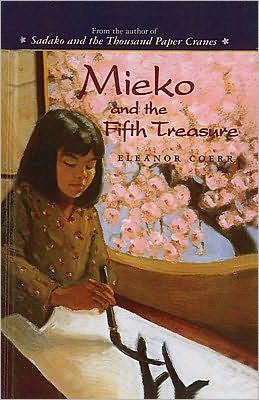
2. Mieko and the Fifth Treasure – Eleanor Coerr
This book is not really so famous, but it is on the recommended book list. What’s great about “Mieko and the Fifth Treasure” is that it’s short. At only 77 pages long, this will be an easy read. Again this book is aimed at young native English speakers, so if you’re learning English, the level won’t be so difficult. This book will keep you interested as you’ll learn many interesting things about Japan and its culture.
Plot Summary
This is an emotional story about Mieko. Mieko is a talented artist and calligrapher (handwriting artist). Her hand is badly hurt during the bombings of the war. The scared little girl is sent to live with her grandparents in the countryside where it is safer.
Mieko is worried and afraid that she’s lost her 5th treasure – the “beauty in her heart.” This treasure is the key to her happiness and her beautiful art.
Mieko starts a new school. Her new classmates are mean. They constantly laugh at her and tease her which just makes her angrier. Her grandparents eventually manage to lift her darkness through their patience and wisdom. She also finds a good friend in Yoshi. Yoshi is one classmate who is really kind.
Mieko also grows close to Yoshi’s aunt. Her friend’s aunt is strict, but kind and encourages Mieko to pick up her paintbrushes again.
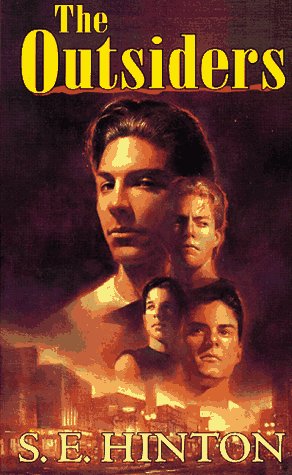
3. The Outsiders – S.E. Hinton
This short novel is perfect for EFL learners. It has modern themes and typical teenage issues that people around the world have experienced. There are very few cultural notes in this, which means you don’t need much background information. The sentences are short and easy to understand. The vocabulary is also very easy. You should be able to read this book without difficulty.
Plot Summary
Ponyboy Curtis is one of the main characters. He is a part of a gang of teenagers called the Greasers. After he leaves the movie theater one day, he’s attacked by a rival (enemy) gang. Ponyboy’s friends chase the group away and he is saved.
The next evening, Ponyboy and his friends go to watch a movie again. They sit behind a few pretty girls from the other gang. They end up sitting together with the girls. Ponyboy and Cherry learn that they have a lot of things in common even though they are from different gangs. The boys begin to walk the girls’ home, but on the way they meet the girls’ boyfriends. The girls have to leave so a fight does not begin.
Because Ponyboy arrives late at home his brother becomes angry. This causes them to fight. As a result Ponyboy tries to run away from home. They meet up with the rival gang again and yet another fight begins. This time one of the enemies is killed.
Ponyboy is really scared. They hide in a church and try to hide their appearance by dyeing (coloring) their hair. A number of different fights break out between the two gangs. Eventually Ponyboy wakes up in the hospital.
A trial is set in the courtroom and the judge has to decide Ponyboy’s fate (future). Is he guilty or not guilty?

4. The House On Mango Street – Sandra Cisneros
The great thing about “The House On Mango Street” is that it’s an interesting read. It’s written from the point of view of the writer. You can really feel what the protagonist (the main character) feels. The sentences are really short so it’s also easy to understand. There are a few challenging words and a little bit of descriptive language, but you can usually understand them with the context. Another great thing about this is book is that it gives you a deep understanding of a different culture.
Plot Summary
This book follows the life of Esperanza, a Mexican girl. The novel takes place over the period of one year. Esperanza moves into a new home on Mango Street. The house is much better than her old one. It is the first house her parents have ever owned – all their other houses have been rented. Esperanza is not very happy because she had been dreaming of a different home – a bigger one. Their new house is old and small. The house is located in a busy Latino area of Chicago. In the new home, Esperanza feels like she has no time to be alone. She promises herself that one day she will leave and have her own home.
Throughout the novel the young girl grows up a lot. The story follows her life as she makes friends, her body changes and she begins to have feelings for a boy. With her new friends, she has many adventures. When she goes back to school after the vacation Esperanza is embarrassed about her family being poor. She writes poetry secretly to make her feel better.
There is a lot of focus on other women in the community and Esperanza hopes never to be like them. Through watching the older women and how they are stuck, she knows that she wants to leave.

5. Thirteen Reasons Why – Jay Asher
This story takes place in the present, which means the writer writes using simple grammar. All sentences are short and the vocabulary is relatively easy. The interesting grammar and short paragraphs make this a quick and easy book for ESL learners. This is an award-winning book and on the NY Times best books list, so it’s worth a read. This book deals with some heavy issues. If you’re looking for something light and happy to read over the summer vacation, you should not read this book.
Plot Summary
The man character is Clay Jensen, a quiet high school student. He comes home from school to find a parcel at his front door. He does not know who sent it. He opens it and discovers 7 cassette tapes. These tapes are from Hannah Baker, his previous classmate. She had emotional problems and has committed suicide (killed herself).
.JPG)
The tapes came with instructions. The paper stated that they should pass the tapes from one student to another student. There are 12 people in total. In the paper, she explains to these people that they helped her die – she gives them 13 reasons. Hannah also sends another set of tapes to a different person. She gives them a strong warning that if they don’t pass the first set of tapes onto the next person, the whole school will know how they were a part of her death.
We hear about her pain. She talks about her first kiss, people who lied to her and stole from her. Everything started with gossip. The gossip then grew and became out of control. The book follows each person’s story and the reason why she felt hurt including her English teacher who didn’t take her seriously.
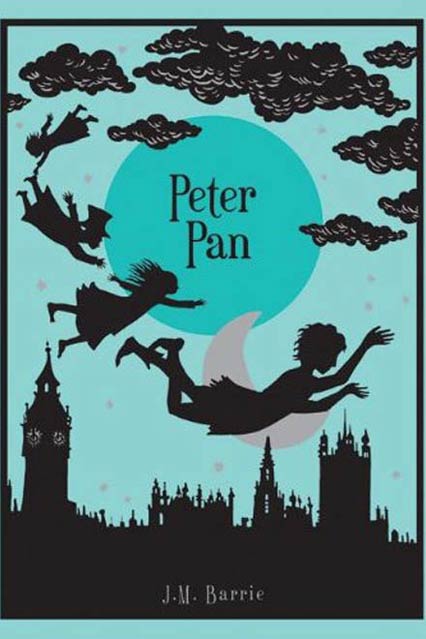
6. Peter Pan – J.M. Barrie
Almost everyone knows the story of “Peter Pan” which is why this is an easy read. Being familiar with a story already helps the reader to understand the text better. This book is aimed at children, but it continues to be enjoyed by adults around the world too.
Plot Summary
Every night Peter visits the Darling family house and listens to Mrs. Darling tell bedtime stories. He sits on the window listening. One evening, they see Peter trying to escape. As he tries to run away, he loses his shadow. He goes back to get his shadow. He wakes up the daughter of the house, Wendy Darling. Wendy helps him attach his shadow to his body again. Wendy tells him she knows a lot of bedtime stories too.
Peter invites Wendy to return to Neverland with him. He wants her to be the mother of the Lost Boys. Wendy agrees to the mission and asks for her brothers Michael and John to join them.
They have a magical flight as they travel to Neverland and have many adventures along the way. Wendy is nearly killed and the boys build her a house in the trees to recover. After Wendy is okay, she takes the role of the mother.
After all their adventures and fun, Wendy decides that her place is at home with their mother. Wendy helps all the Lost Boys return to London. But Peter doesn’t want her to go. Instead he tries to trick her. He tells her that their mother doesn’t want them anymore. However, he understands how sad their mother must be. In the end, he decides to let them go home.

7. The Old Man and the Sea – Ernest Hemmingway
This is a famous classic. Almost all native English speakers will have read this book at some point in school. So, if you ever find yourself in a conversation about literature and books, this is a good one to talk about. At some points it has a little bit of difficult vocabulary, however, it is short and you won’t have too much trouble being able to finish it.
Plot Summary
This is a story of a long fight between an old, experienced fisherman and the best fish he ever caught. Santiago has returned to the village without any fish for 84 days. The young boy who helps Santiago is told by his parents to join another boat. But the young boy continues to help the fisherman at night.
On the eighty-fifth day, his luck changes and so does his life. Santiago sails his boat further away. He drops his fishing lines. At 12 pm, a huge fish (a marlin) takes the bait (the food used to attract fish). The man tries to pull the fish up, but the fish is too big and strong. Instead, the fish begins to pull the boat. The old man continues to fight and hold on to the line. The fish pulls the boat around the sea for two days.
On the third day, the fish gets tired. Santiago is able to pull the fish closer and kill it. It’s the biggest fish he has seen in his life. He begins to sail back to the village, but the blood of the fish attracts sharks. The boat is attacked by a Mako shark, but Santiago is able to kill it. He kills most of the sharks, but there is a problem. They have eaten the meat of the fish and now only the skeleton (bones) is left. He returns back to his home and falls asleep.
All the people of the village are amazed at the size of the fish skeleton. The young boy agrees to be the fishing partner of Santiago once more.

8. The Giver – Lois Lowry
“The Giver” begins in a very interesting way and catches the attention of the readers from the beginning. It has easy-to-understand grammar. Most of the grammar is just past simple and past perfect. All of the sentences are short and there is no confusion in the story. This is a longer book. It’s really easy though, so you’ll finish it quickly.
Plot Summary
Jonas is a young boy. He lives a very safe life with a lot of order and rules. There are many rules and everyone follows them. The citizens’ lives are planned for them and they don’t often make a decision by themselves.
They try not to say anything different. One rule is that you must never say anything that will make another person uncomfortable. Every husband and wife is matched by a special committee. Each family has two children, one boy and one girl.
When Jonas and the rest of his group become the “Twelves” in December, they get special jobs. Because Jonas is smart and respected, he is given an extra special job. His new job is to become the Receiver of Memories. The Receiver of Memories is the only person in the group who can see all of the memories in the past. He must keep these memories secret until he trains another person to take his place. This job is really difficult. This person knows things that others do not, and they also have to deal with all of the sadness from the past.
At first Jonas is really excited. But he soon learns some truths about the people in the community. He comes to understand that this kind of life is unfair. He wants to allow people to make their own choices. Jonas comes up with an interesting plan to change the community. He decides he needs to move the community to another place. In his plan, they will get their memories back and be able to live a good and fair life.
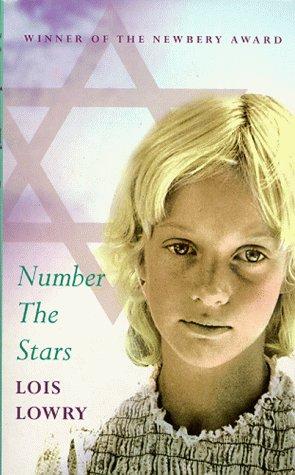
9. Number the Stars – Lois Lowry
This is a realistic novel. It’s based on history. Unlike other historical literature, it’s easy to understand. If you already know a lot of information about World War II, this might be an interesting book for you. It’s not recommended if you don’t know too much about the World Wars. In this case, you will be focusing on trying to understand the facts too much so you will not enjoy the book as much.
Plot Summary
This is a story of hope and courage. The year is 1943 in Copenhagen, Denmark. The area has been taken over by Hitler’s army. There are soldiers everywhere. The life of 10-year-old Annemarie has changed a lot. There is little food and everyone is very scared. There is talk about moving all of the Jewish people to another place. This is difficult for Annemarie because her best friend, Ellen, is Jewish.
This is a different book about the war. It shows it was not only the Jewish people who suffered during the war. Annemarie’s family lost their eldest daughter, Lise, a few weeks before her wedding.
Annemarie will later do what her sister, Lise, did. She will join the resistance party to fight against the Nazis. She ends up being a heroine (a female hero) for a few reasons (which I will not tell you because I don’t want to ruin the story).

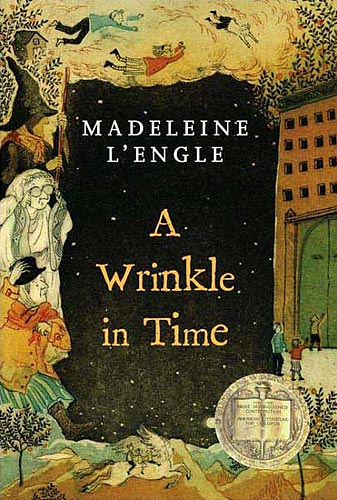
10. A Wrinkle In Time – Madeline L’engle
This book has a mix of shorter and longer sentences. The short sentences allow the readers to relax a little bit more. They also create the scene well and let you know what is happening through simple words. There is a lot of vocabulary to learn. It is a good book if you’ve already got experience reading novels in English. Make sure you have your vocabulary notebook with you, just in case there are any cool words that you’d like to learn. This book has MANY!
Plot Summary
Meg is 14-years-old. Everyone sees her as a troublemaker (a person who makes/causes trouble). They think she’s a bad student. Everyone in her family seems to be perfect. Her mom is a very beautiful scientist. Her twin brothers are very athletic. And her little 5-year-old brother, Charles Wallace Murry, is a child genius and can often read the mind of Meg.
One night Meg can’t sleep. She goes downstairs to find her young brother sitting at the kitchen table drinking milk. Later their mom joins them. A strange neighbor called Mrs. Whatsit joins them. Mrs. Whatsit is talking a lot and says that the “tesseract” is real. We (the readers) don’t know what this means, but Mrs. Murry knows what it is. She looks like she is going to faint (fall down from sickness or fear).
Meg and her brother meet a friend the next day. Calvin O’Keefe is a high school junior student. Together, the three of them go to visit an old haunted house which belongs to Mrs. Whatsit. While going there they meet Mrs. Whatsit’s friend, Mrs. Who. Mrs. Who is also very strange. Meg and Calvin begin to like each other. Charles suddenly announces that they should focus on finding their father who is lost somewhere in the universe.
Strange things happen and the older women turn into supernatural (not from Earth) beings. They transport the kids to the universe by the “tesseract.” They stop and visit different planets on the way. The women tell the children that the universe is being attacked by the “Black thing” (the devil).
They find out where Meg’s father is being kept. Charles tries to use his psychic (in his mind) powers to see where their dad is. Eventually they find their dad, but not without drama. Along the way, Meg learns to love. She uses this new love to help them escape.
There are so many cool and fun books to read. It’s always better to find books that are for middle school readers in the US so the language and ideas will never be too difficult to understand.
Reading is a wonderful way to improve your English. It’s an awesome way to learn new vocabulary. It’s a great way to learn how to guess what things mean and at the same time enjoy English in another way. Reading opens your mind.
So what are you waiting for? Jump on Amazon and order your book today!
If you liked this post, something tells me that you’ll love FluentU, the best way to learn English with real-world videos.
Sign up for free!
http://www.fluentu.com/english/blog/easy-simple-english-books-read-beginners/
If you'd prefer to explore more about English teaching you must check out this site. It has got endless supply of excellent ideas to check out. I'd quite enjoy to learn your thoughts on the subject when you have things to write about. Leave a comment anytime you fancy.
New School Year - Getting to Know You Activities for the First Day
With that in mind it really is worth considering it with ESL in the front. In case you really drill through it whilst keep this in view I'm sure it'll make an impact on a long run.
I am not saying that you must stick with it no matter what then again accepting it as a rough guidebook can make a difference.
September has arrived again! The summer is almost over in this part of the world and many teachers start their classes with new students. It is time to build new relationships, a relationship of confidence between our students and us, but between students and their peers as well.

No significant learning can occur without a significant relationship. James Comer.
After many years of teaching English to students of different ages and levels, I must admit that I still get butterflies in my stomach on the first day of class. However, thanks to all those generous teachers who are online and share their successful activities on their blogs or on Twitter, I have learnt a lot on how to create an atmosphere of trust, respect and learning from day one. Now I would like to share some of those activities with you:I hope you find these ideas useful for your first day. If you would like to share your own ones with other teachers, don't forget to leave a comment!
http://myeslcorner.blogspot.com/2013/09/new-school-year-getting-to-know-you.html
Thank you for bearing with me in this post. I hope you didn't care devoting your time on it. If you enjoyed it there are way more about teaching as well as other topics on http://lauramcinerney.com/. Remember to take a look as you please and whenever you might have any insights on this share under.
A few pronunciation games
Honesty Time: I don't have much formal education in teaching Pronunciation, as in a background in linguistics. I took a semester-long course in Japanese linguistics in college, that's it. Anything I know was the result of two quick sessions in the CELTA and being shoved into the position of a Pronunciation teacher for 5 weeks. I definitely did not do the best job for those students, but I made up a few resources that helped break the monotony of fighting against what your brain can hear and your mouth can produce.

Here is one thing I have learned though: pretty much every students wants to take a "pronunciation class" because they are aware that they make the wrong sounds and it makes them feel bad. They think that a class focused only on making the right sounds will fix the problem and then they will speak perfect English. The reality of it to me is that a solely Pronunciation-focused class can be very dry and frustrating. When I taught that pronunciation class, breaking up the frustration with a little fun got spirits up and everyone was ready to keep working.
So I made up these games, based off of a similar game idea the teachers in Japanese schools used often.
I made three worksheets here, but they are REALLY easy to whip up five minutes before class with pen and paper (if you have access to a copier). You might be familiar with minimal pairs already, but in case you need some help, this site is useful.
You will need one copy for each group of two or three students. There are two ways to play, one with you as the "caller" and one with a student in each group as a "caller".
Teacher as Caller:
1. Each group of two (or three) students receives one piece of the paper with various words on it. They should both have a pen or pencil, preferably with different colored ink or something.
2. After making the students familiar with the different sounds of the words on the page, the teacher begins by calling out the words, one at a time. After the students hear a word, they race to circle the correct word. The student who circles the correct word (as called out by the teacher) gets the "point".
3. Then the teacher will call out the next word, and the students race again for the correct word on their paper. The student who has circled the most correct words and gains the most "points" and wins the round.
Student as Caller:
1. In groups of three, two students have different colored pens or pencils, and one student in the group will call out the words one by one. Like above, the other two students will race to circle the correct word.
2. The student with the most correct words circled wins.
Note: This version is harder for all the students since the "caller" may not make the correct sounds, but if there is an error, the students are very likely to address it and the "caller" is made very aware that they are being misunderstood. Everyone in the group ends up repeating the difficult word multiple times and usually practicing the target pronunciation.

If you are interested, here are the worksheets to try out on your own. (They are not the prettiest things...Working on formatting.)
A basic minimal pair worksheet like below, download here.
The /e/ and /ɪ/ minimal pair worksheet like below can be found here.
The consonant minimal pair /f/, /b/, and /v/ worksheet like below can be found here.
"The best way to have a good idea is to have lots of ideas. Linus Pauling"
http://tea-godzilla.blogspot.com/2013/10/a-few-pronunciation-games.html
I hope you've found this article as remarkable as I did. I am really interested in reading your thoughts about it . When it has arouse your interest on EFL exercises you could find more about this on http://www.edudemic.com also.
Sentence Diagramming
« Be A Better Writer | Main
August 25, 2014
Sentence Diagramming
Many years ago, back when I was in elementary school, diagramming sentences was a basic staple of every English or writing class.
The idea is actually quite simple...
...and it is a great way to highlight the subjects or verbs of a sentence and how they are modified by adverbs or adjectives.
I don't know if this framework works in other languages, but I'm guessing it must.
The essential idea is that you take a typical sentence and diagram it - it is kind of like drawing a blueprint, but instead of a building, you analyze and present a sentence in a visual form.

Here's an article you can read or listen to - http://www.npr.org/blogs/ed/2014/08/22/341898975/a-picture-of-language-the-fading-art-of-diagramming-sentences?utm_source=facebook.com&utm_medium=social&utm_campaign=npr&utm_term=nprnews&utm_content=20140822.
As I mentioned above, I grew up diagramming sentences. I'm not sure I found it terribly helpful at the time, but I am sure that I have incorporated the basic principles in my writing since then. In other words, I may not have liked or appreciated it, but I am certain it has made me a better writer.
Let me know what you think and whether you find it useful or not.
Morf
Also, Morf just might be available to visit your school or agency this coming September. You can contact him at mmorf@mail.com.
"It is, in fact, nothing short of a miracle that the modern methods of instruction have not yet entirely strangled the holy curiosity of inquiry; for this delicate little plant, aside from stimulation, stands mainly in need of freedom; without this it goes to wrack and ruin without fail. It is a very grave mistake to think that the enjoyment of seeing and searching can be promoted by means of coercion and a sense of duty."
Posted by mmorf at August 25, 2014 12:18 AM
Post a comment
I hope you've found this post as appealing like I did. I am really looking forward to hearing your words regarding this within the comments . When it has got rised your interest about teaching activities you will find regarding this on http://learnenglishkids.britishcouncil.org/en/ also.
Oh Dear…
If you're new here, you may want to subscribe to my RSS feed. Thanks for visiting!

It looks like the post-hacking cleanup is ongoing. The site has been reset to its defaults as I’ve installed a fresh version of the theme I was using, so bear with me if things look odd or difficult to use.
If you are an edu-blogger or any other kind of blogger, be sure to keep your blogging platform up to date AND your themes up to date, and don’t keep old themes or other things lying around. They can be very bad news.
I need to bear this in mind considering English as a second language is my job. Having said that, I would not like looking at anything like it were being carved in stone nor must you. It is an fascinating thought though and would be worth additional chat. We should get back to it and find out how far we will arrive through moving this further.
Possibly Related Posts:

If you'd prefer to explore more about English teaching news you might check out http://www.teachingenglish.org.uk/teaching-resources. It offers unlimited source of fantastic ideas to explore. I would absolutely love to know your opinions on the subject when you have things to share. Leave a comment or hit me up with an email when you like.
 |
